Choose tremix flooring when a floor will carry trolleys, vehicles or heavy loads, and normal concrete flooring when traffic is light and a tile or other finish will go on top. Tremix is concrete laid the same way, but finished with vacuum dewatering and power troweling, which makes the top surface denser and harder.
Both floors use ordinary cement concrete. The difference is what happens in the few hours after the concrete is poured, and that difference shows up years later as dust, cracks or a surface that still looks sound.
What tremix actually means
"Tremix" is a trade name that stuck. On site it refers to a vacuum dewatering process. Concrete needs extra water to be workable, but that extra water weakens the surface once it evaporates.
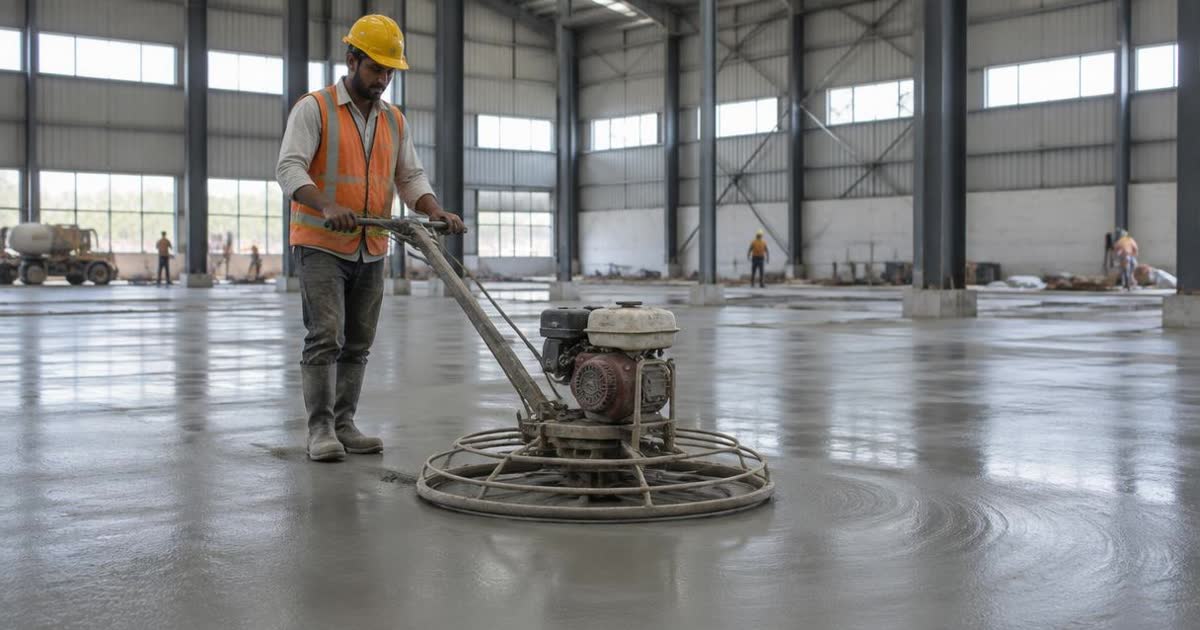
After the concrete is laid and levelled, filter mats and a vacuum pump draw excess water out of the top layer. The concrete stiffens quickly and is then floated and troweled with machines to a smooth, tight finish.
Side-by-side comparison
Strength and wear
Removing surplus water lowers the water-cement ratio at the surface. The result is a top layer that resists abrasion and dusting far better than a hand-finished slab of the same mix.
Speed
Because the concrete stiffens faster, a tremix floor can usually take light foot traffic sooner. Large areas are laid in panels, so work moves steadily through a shed or parking area.
Cost
Tremix needs extra equipment and a trained crew, so the rate per square foot is higher than a basic concrete floor. For a working floor it usually pays back by avoiding early repairs and topping layers.
Where each floor makes sense
- Tremix: factories, warehouses, godowns, basement and open parking, cold storage, workshops and internal roads.
- Normal concrete: base floors under tiles or stone, store rooms, courtyards and areas with light foot traffic.
- Either, with care: commercial ground floors, where the final finish and the expected load decide the choice.
For heavy racking or forklift traffic, also read our industrial flooring guide, which covers slab thickness and joints in more detail.
Flooring
Planning a factory or parking floor?
Share the area and the expected load. We will recommend the right floor and send a quote.
Common mistakes that ruin a good floor
Most complaints about tremix flooring come from site practice rather than the method itself. Watch for these on your project:
- A poorly compacted sub-base that settles and cracks the slab from below.
- Adding water to the mix on site to make it easier to spread.
- Cutting control joints too late, which leads to random cracks.
- Stopping curing after a day or two instead of keeping the floor wet for the full period.
Conclusion
If the floor is the working surface, choose tremix. If it will be covered or sees little traffic, a well-made normal concrete floor is enough. Either way, the sub-base, mix and curing matter as much as the finish.
We lay tremix and concrete floors for factories, warehouses and parking areas in and around Agra. Explore our flooring services or contact us for a site visit and quote.
Frequently asked questions
Is tremix flooring the same as a concrete floor?
It is a concrete floor finished with vacuum dewatering and power troweling. The extra process makes the surface denser and more wear-resistant.
Can tremix be done on an existing floor?
Usually a new concrete layer is laid over a prepared base. The old floor must be checked first for settlement and cracks.
How long should a tremix floor be cured?
Curing should continue for at least seven days, and longer is better. Keeping the surface moist helps the concrete reach its strength.
Why does my concrete floor create dust?
Dusting usually comes from too much water at the surface, poor finishing or short curing. A dewatered, well-cured floor resists it much better.
Flooring
Planning a factory or parking floor?
Share the area and the expected load. We will recommend the right floor and send a quote.