Good industrial flooring starts with three questions: what loads will the floor carry, how will it be used every day, and what is underneath it. The answers decide the sub-base, slab thickness, reinforcement, joint layout and surface finish.
A floor that cracks or dusts in a working warehouse is hard to fix without stopping operations. Spending time on planning before the pour costs far less than repairs later.
Know your loads first
Share these details with your contractor before any rate is discussed:
- Forklift or pallet truck type, wheel type and loaded weight.
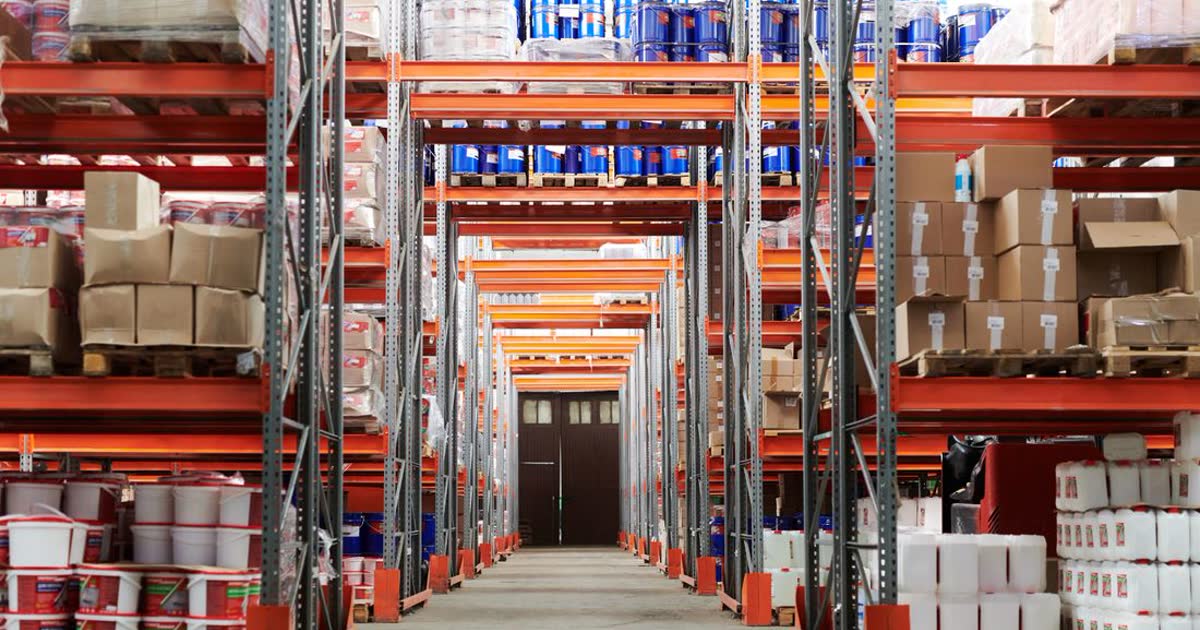
- Rack heights and the load on each rack leg.
- Machinery bases and any vibrating equipment.
- Trucks or tractors entering the building.
Point loads from rack legs and hard forklift wheels are what usually break floors, not the total weight stored.
The sub-base matters more than you think
The concrete slab rests on compacted soil and a granular layer. If that support is soft or uneven, the slab will crack, however good the concrete is.
- Remove topsoil and soft spots, and fill with suitable material in layers.
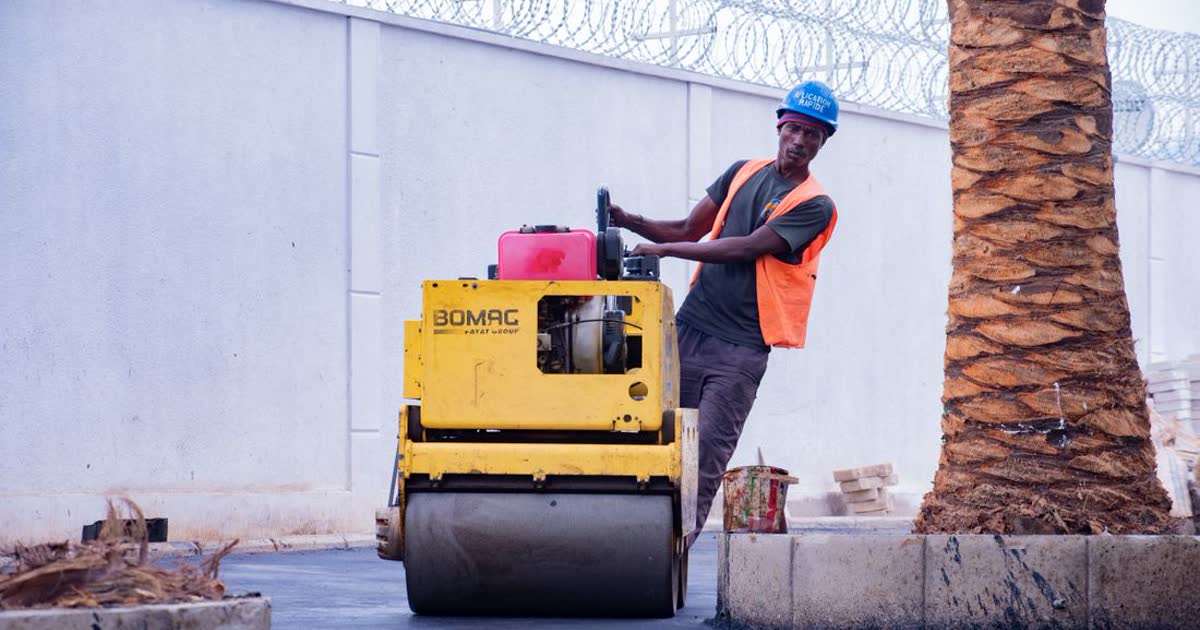
- Compact each layer with a roller at the right moisture.
- Lay and compact a granular sub-base to a level surface.
- Place a plastic sheet to stop the ground drawing water out of the fresh concrete.
Slab thickness, reinforcement and joints
Thickness and grade
Thickness and concrete grade should be calculated from the loads and soil, not copied from another project. Heavier traffic needs a thicker slab or a stronger mix, and sometimes both.
Joints
Concrete shrinks as it dries, so it will crack somewhere. Saw-cut joints decide where. They must be cut at the right spacing and at the right time, then filled to protect the edges from forklift wheels.
Flooring
Building or upgrading a warehouse?
Tell us the floor area and the loads it will carry. We will plan the floor and quote.
Choosing the surface finish
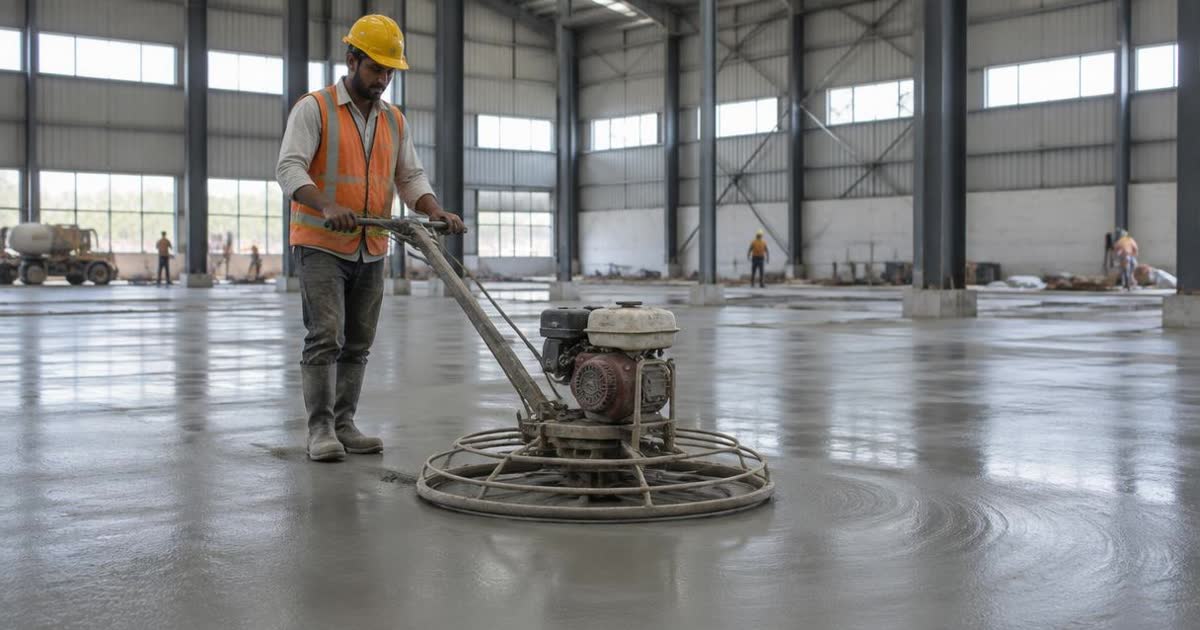
- Tremix with power trowel: the standard choice for most warehouses and factories in our region.
- Floor hardener: a dry shake topping worked into the surface for extra abrasion resistance.
- Coatings: epoxy or PU coatings where hygiene, chemicals or colour coding matter.
Not sure how tremix compares with a plain finish? See tremix flooring vs normal concrete flooring.
Curing and handover
Keep the floor continuously moist for the full curing period and keep vehicles off until the concrete has gained enough strength. Rushing a warehouse into use is one of the most common reasons for early surface damage.
Upgrading an existing floor
Old floors that dust, crack or hold water can often be repaired rather than replaced. Damaged joints are cut out and refilled, cracks are sealed, and worn areas can take a bonded topping or coating.
Where the slab has settled or rocks under load, the base below has failed. In that case, replacing the affected panels with properly designed industrial flooring is the lasting fix, and it can often be phased to keep the warehouse working.
Conclusion
Plan loads, prepare the base, design the slab and joints, choose the finish, then cure patiently. Industrial flooring done in that order gives a floor that works as hard as your business does.
BS Rajput Contractor lays industrial, factory and warehouse floors around Agra. See our flooring services or contact us to discuss your project.
Frequently asked questions
What is the best flooring for a warehouse?
For most warehouses, a well-designed concrete slab with a tremix or hardened power-troweled finish gives the best mix of strength and cost.
Why do warehouse floors crack?
Common causes are a weak sub-base, joints cut too late or too far apart, a slab too thin for the loads, and short curing.
How soon can forklifts use a new floor?
Only after the concrete reaches adequate strength, usually not before the full curing period. Your contractor should confirm with test results.
Flooring
Building or upgrading a warehouse?
Tell us the floor area and the loads it will carry. We will plan the floor and quote.